

Eco-Cha Tea Club
Roasted Leafhopper High Mountain Tea Tasting Notes | Eco-Cha Tea Club
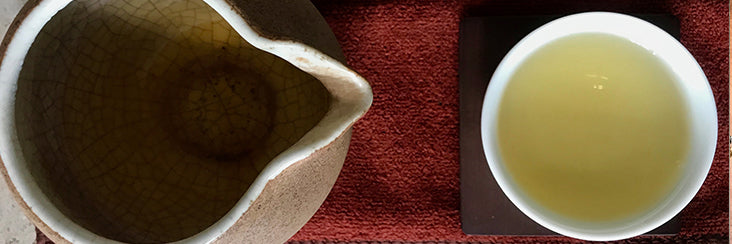
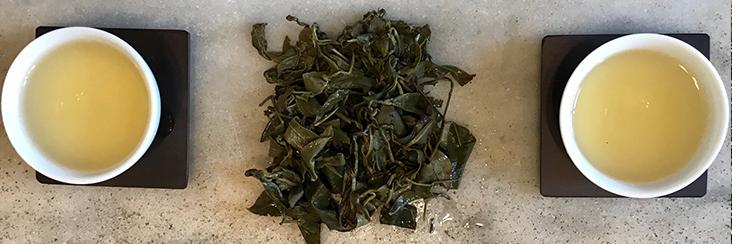
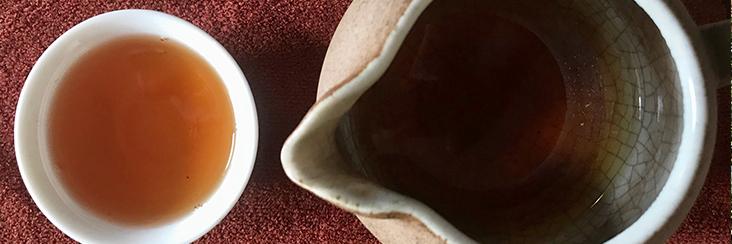
The appearance of the brewed tea has gained substance, and become a deeper yellowish gold in comparison to the thinner, lighter unroasted brew. This coincides with the flavor profile in that the roasted version is heartier, with a more balanced character. The aroma coming off the leaves from the initial rinse is reminiscent of buttered carrots or yams. After the first brew, the aroma is more like grilled corn, cooling off into freshly baked scones. The second pour brought on stronger roasted vegetable notes, but again cooling off into a pastry aroma.

Roasted Leafhopper High Mountain Oolong Tea
Premier Crop Organic Jin Xuan Oolong Tasting Notes | Eco-Cha Tea Club
Premier Crop Organic Jin Xuan Oolong | Eco-Cha Tea Club
Dong Ding Tie Guan Yin Tasting Notes | Eco-Cha Tea Club
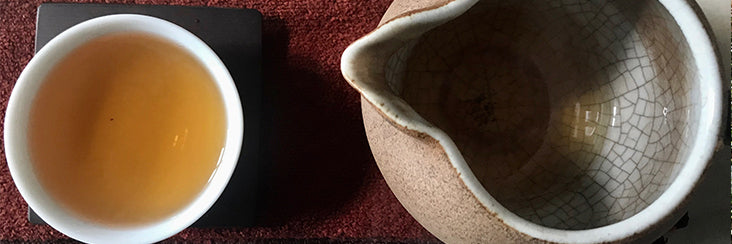
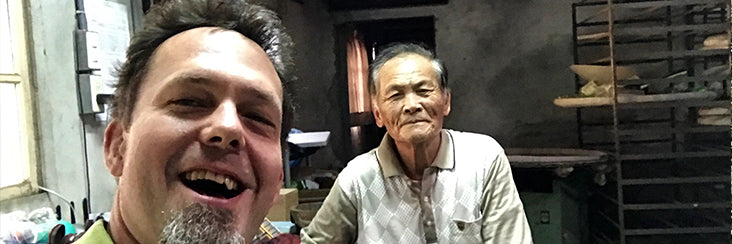
This month's batch of tea being shared with the Eco-Cha Tea Club was made by Mr. Su — an 80 year-old artisan of traditional Dong Ding Oolong Tea. He planted a plot of the Tie Guan Yin strain in his backyard several years ago, and this is the second time we've sourced this tea type from him. Mr. Su is our favorite representative of traditionally made tea in Taiwan, and it brings us a special kind of joy to be able to share his tea with our tea club members.
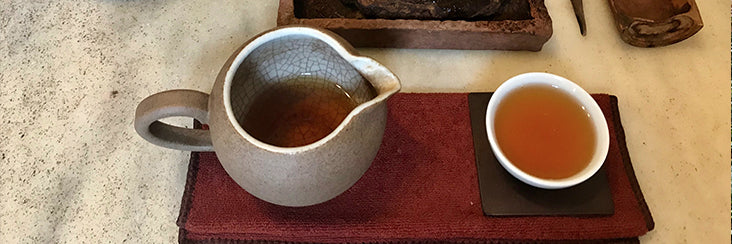
This batch has a particularly sweet character, with slightly tangy, fruity notes and a pleasantly clean lingering aftertaste. It has just enough of that cured, almost fermented character that makes it reminiscent of a traditionally made Tie Guan Yin Oolong. But given that it was only roasted once, it maintains a mild flavor profile similar to a Hong Shui Oolong.
Dong Ding Tie Guan Yin Oolong | Eco-Cha Tea Club
High Mountain Hong Shui Oolong Tea Tasting Notes | Eco-Cha Tea Club
High Mountain Hong Shui Oolong Tea | Eco-Cha Tea Club
Leafhopper High Mountain Tea Tasting Notes | Eco-Cha Tea Club
The most commonly referred to trait in Leafhopper Tea is a honey-essence note in the fragrance as well as the flavor profile. This hint of honey varies greatly from batch to batch of "bug bitten tea", as it is also referred to locally. But the most general characteristic of this tea type is its bold complexity of aroma and flavor. It simply has a substance that clearly distinguishes it from a standard High Mountain Tea.
Leafhopper High Mountain Oolong Tea | Eco-Cha Tea Club
Our expressed intention in sharing this batch of tea is to offer Eco-Cha Tea Club members a chance to experience the original unroasted flavor profile of a tea type that, in the local Taiwanese dialect, is simply called "Leafhopper Tea".
Ying Xiang High Mountain Black Tea Tasting Notes | Eco-Cha Tea Club
This month's of tea being shared with the Eco-Cha Tea Club is a a first in our experience of sourcing tea in Taiwan for well over 20 years. In recent years, Taiwan's High Mountain Tea Farmers have dedicated a short growing season following their spring harvest to making Black Tea. The original Qing Xin strain along with modern hybrids are cultivated for the production of High Mountain Tea. These strains are generally distinguished from Assam and Taiwan's indigenous wild strain of tea by simple using the term "Small Leaf Type". So Black Tea made with leaves with anything other than Assam or Wild Tea is referred to as Small Leaf Black Tea. This is the first time we've sourced a batch of High Mountain Small Leaf Black Tea that was made with the newer hybrid strain called Ying Xiang #20.
Ying Xiang High Mountain Black Tea | Eco-Cha Tea Club
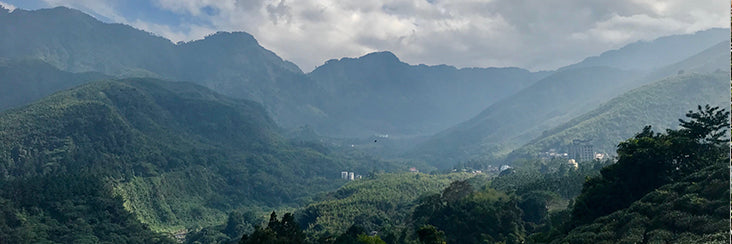
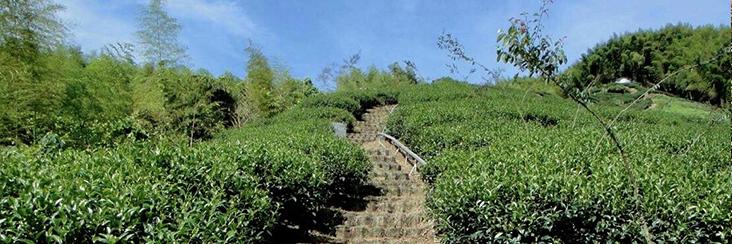
Batch #23 of the Eco-Cha Tea Club was harvested in early summer from a plot of Ying Xiang #20 on Big Wheel Mountain in the Shan Lin Xi tea growing region of Central Taiwan. The leaves were picked when they were young, just a bit more than half as mature as leaves that are picked to make Oolong Tea. It is becoming increasingly popular to allow the leaves that were too young to pick at spring harvest to grow for another month or so, and then harvest them at about half-mature size to be made into Black Tea. The younger leaves are able to be oxidized more optimally, to produce an especially aromatic, mildly sweet character of Black Tea that is easily distinguished from both Assam and Chinese Black Tea types.