

Eco-Cha Tea Club
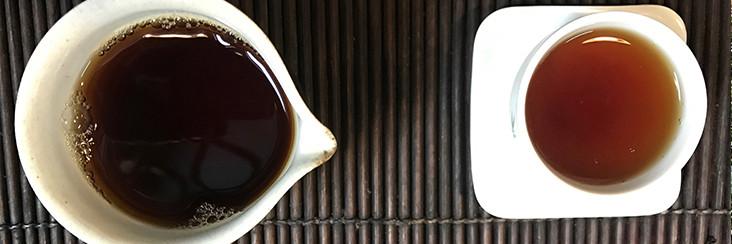
Aged Harbor Tea Tasting Notes | Eco-Cha Tea Club
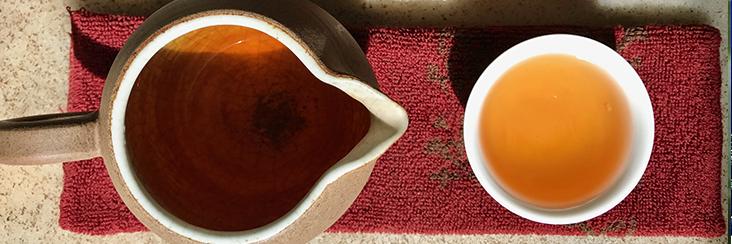
The image above portrays the visual character of the tea being shared in this month's Eco-Cha Tea Club. It's a rich, hearty brew that is both smooth and complex with a heady finish that is specific to an aged Oolong. The bubbles created in the tea pitcher when pouring off the brewed tea indicate that the essential aromatic oils and other key constituents have been preserved and concentrated in the aging process. We are excited to share this rare batch of Wuyi Oolong that was cultivated, cured, and aged at the southern tip of Taiwan in the tiny village of Gangkou, Pingtung County.
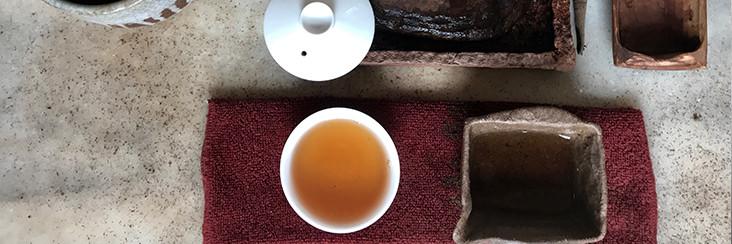
Award Winning Traditional Dong Ding Oolong Tea Tasting Notes | Eco-Cha Tea Club
As a singular tea type, we just keep coming back to a well made Dong Ding Oolong for one of the most reliably satisfying character and flavor profiles. And this batch was selected and roasted by a friend who happens to be the most respected professional competition player and master roaster we know. Due to his continued success in virtually all of Taiwan's competitions within the roasted Oolong category, he has been invited to conduct seminars for tea makers from all over Taiwan. He is a leading professional in the art of roasting tea. And we are lucky enough to be offered his award winning batches to share with our Tea Club members.
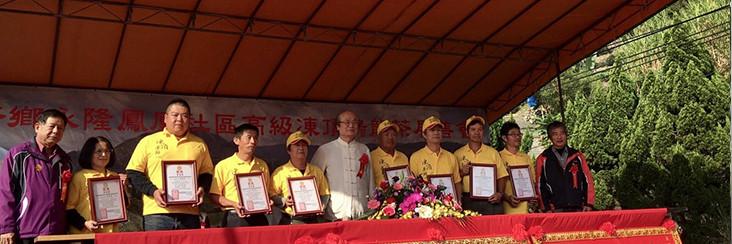
Award Winning Traditional Dong Ding Oolong Tea | Eco-Cha Tea Club
Beyond the fact that the standard of quality in this competition represents our personal favorite — Traditional Dong Ding Oolong, we determined this batch especially worthy of sharing based on its source. The same batch of freshly made tea was divided into several smaller batches and roasted separately. The subtle differences in the outcome of each separately roasted entry batch were tasted by leading professionals and ranked at 4th place, top 2%, and top 8%. We see this as testimony to the decisive finesse involved in the roasting process. On a given day, each roasted batch from the same harvest will have a different outcome. And it is the skill of the master roaster to determine how to navigate each individual roasting process.
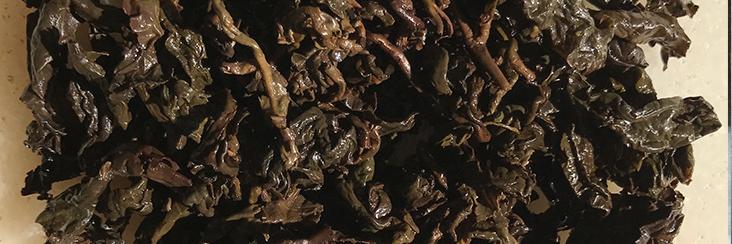
Longan Charcoal Roasted Oolong Tea Tasting Notes | Eco-Cha Tea Club
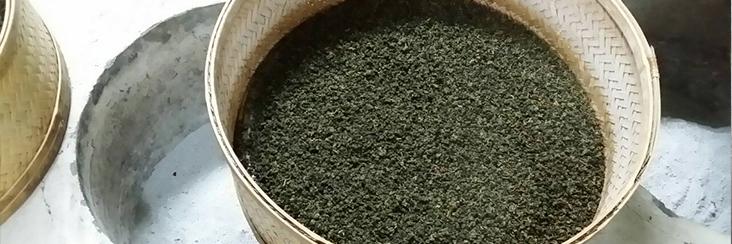
The leaves shown above were harvested in the Shanlinxi High Mountain Tea growing region last spring, and have undergone 8 separate roasting sessions. The first three preliminary roastings were done in a conventional oven in preparation for the traditional method of using charcoal made from the Longan fruitwood.
Longan Charcoal Roasted Oolong Tea | Eco-Cha Tea Club
The leaves in the image above have undergone 8 separate roastings over a few months, for a total roasting time of about 50 hours. Our friend first prepared his tea leaves for charcoal roasting by roasting them 3 times in a conventional oven roaster at low temperature of 80 -100°C. This provides a "base" roasting level that the charcoal roasting can proceed from more efficiently. The leaves were then handed over to a specialized charcoal roaster who charges a standard fee, regardless of how many roastings are needed to achieve the desired results. In this case, it was 5 roasting sessions of incrementally increasing heat, starting from about 90° and finishing at 120°.
Honey Fragrance Oolong Tasting Notes | Eco-Cha Tea Club
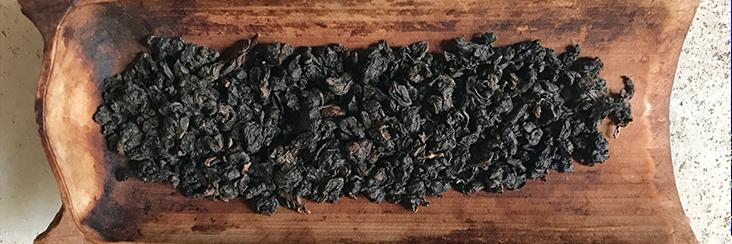
The tea leaves shown above are from a rare batch of winter tea that was affected by the Green Leafhopper. This is the insect that is responsible for the existence of the renowned Oriental Beauty Tea, and the more recent innovation of Concubine Oolong Tea. The presence of this insect indicates that pesticides were not administered during the growing season to deter it. And the effect it has on the bug-bitten leaves is a distinct honey like character prominently in the aroma, but also in the flavor.
Honey Fragrance Oolong Tea | Eco-Cha Tea Club
Bug-bitten leaves are tricky to process, and have relatively unpredictable results, so the artisan must rely on experience and understanding of the unique condition of the leaves when harvested to achieve the desired result. Our friend decided that heavier oxidation of the leaves would produce a more balanced composition, which proved correct. He then decided not to risk losing the elusive "honey fragrance" by roasting the leaves to the degree of a more standard Concubine or Dong Ding Oolong. The final result is a batch of tea that is similar to a Hongshui Oolong, but with a distinct "honey fragrance" character that puts it in a flavor profile of its own.
Tieguanyin Oolong Tea Tasting Notes | Eco-Cha Tea Club
In many cases, traditional styles of tea making involve much more "curing" of the tea leaves that has the dual purpose of bringing out a strong, distinct character, and stabilizes the tea leaves to maintain its flavor — giving it a prolonged shelf life as well as a discernible profile. In this sense, Tieguanyin Oolong is a prime example of a traditional product of regional origin. Initially brought from mainland China, this tradition took root in Northern Taiwan in the 1800's, and it has survived to this day.
Tieguanyin Oolong Tea | Eco-Cha Tea Club
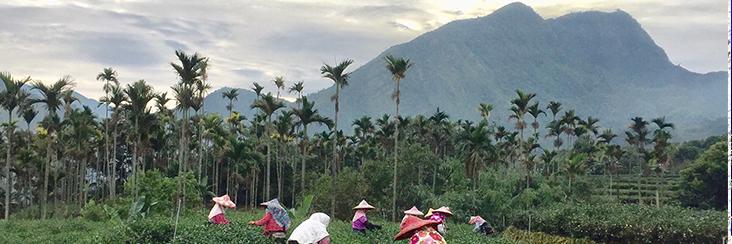
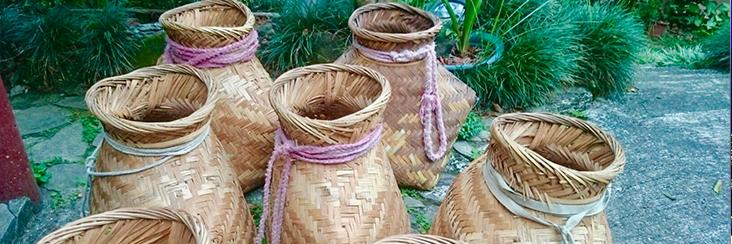
This farm is the only place we've seen the baskets shown above still being used in Taiwan for harvesting tea by hand. They are now typically displayed as a memoir of generations past. This in itself is a symbol for the tradition that this farmer has made his vocation to preserve. At the young age of 20, he inherited his family farm in the historical tea producing area of Muzha in Taipei County, and has dedicated the last 30 years of his life to keeping the tradition alive by making the type of tea for which this place name has been renowned for well over 100 years - Tieguanyin Oolong.
Heirloom Small Leaf Type Black Tea Tasting Notes | Eco-Cha Tea Club
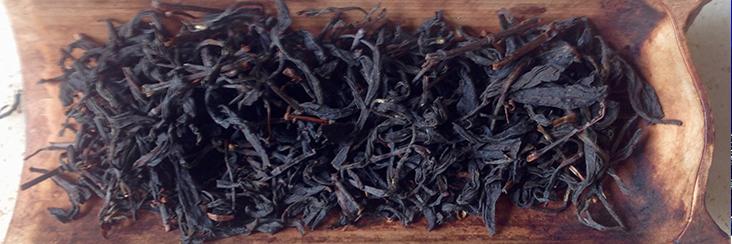
We already knew that this is our favorite source of traditionally made Dong Ding Oolong Tea, but in the last couple years, we've come to realize that their Black Tea is also something very special. In a word, it's the balance of flavor and character that we find unique among Small Leaf Type Black Tea makers. This young tea artisan has learned how to process his family resource of heirloom tea in a way that makes an exceptional Black Tea. There is both a purity and substance of character that sets it apart from the majority of Black Teas, delivering a rich, full flavor that is both satisfying and soothing. The aroma is something like fresh baked plum cobbler, yet the flavor is both clean and richly balanced, with a dry lingering aftertaste that has a finish like a good dessert wine or even champagne.
Heirloom Small Leaf Type Black Tea | Eco-Cha Tea Club
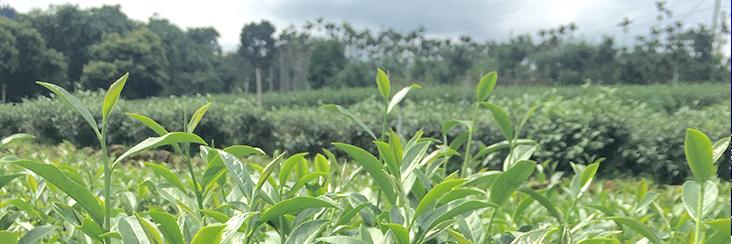
There has been an increasing trend in central Taiwan to use summer harvests of Small Leaf Type tea to make Black Tea. These seasonal batches of Small Leaf Type Black Tea have quickly gained popularity on the domestic market. We now feel inspired to represent this trend by introducing the most rare and quality produce of this type. In the last 12 months of seeking out and deciding upon our next monthly Eco-Cha Tea Club batch, we have chosen 3 very distinct batches of Black Tea, all made from Small Leaf Type strains.
We really would love to hear about your experiences of these batches of Black Tea that we've shared in the last year. Go ahead and post your comments on this batch along with your recollections of the previous batches here!
Organic Wuyi Hongshui Oolong Tasting Notes | Eco-Cha Tea Club
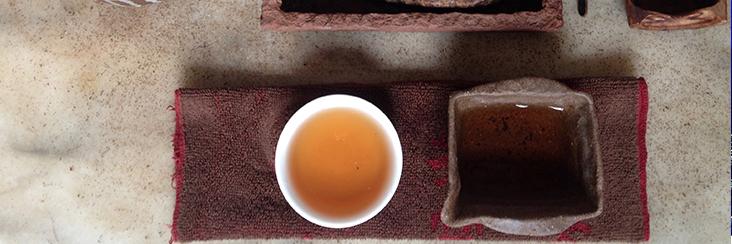
This tea has a very traditionally cured flavor profile. It's soothing yet refreshingly satisfying at the same time. Something about the higher level of oxidation and the very lightly roasted aspect gives it a home-made dessert character, like peach cobbler. It has a tangy sweetness with an underlying hearty, rich aspect that makes it a very substantial, yet not overbearing brew. More and more, we find ourselves appreciating this traditional style of heavier oxidation and lighter roast level that offers a broader flavor profile and a complexity that continues to be intriguing and satisfying brew after brew.